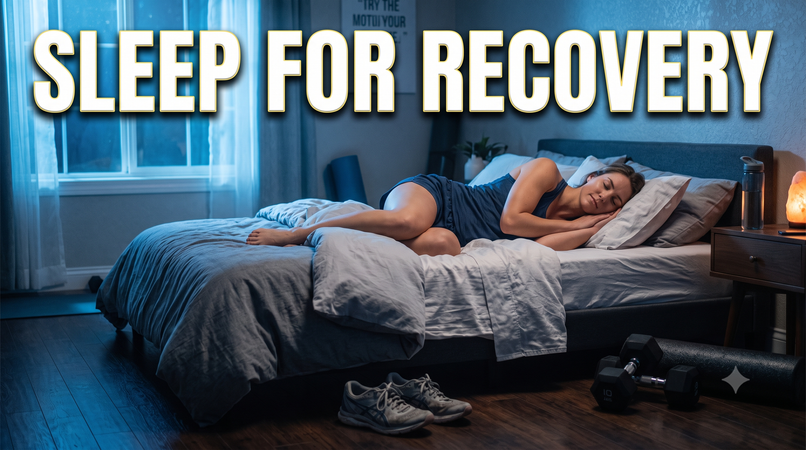
Ask most people how to improve their fitness results and they’ll talk about training harder, eating more protein, or trying a new supplement. Almost nobody leads with sleep — even though it’s arguably the single biggest lever for recovery, and one most active people are quietly getting wrong. Here’s a practical breakdown of what actually matters.
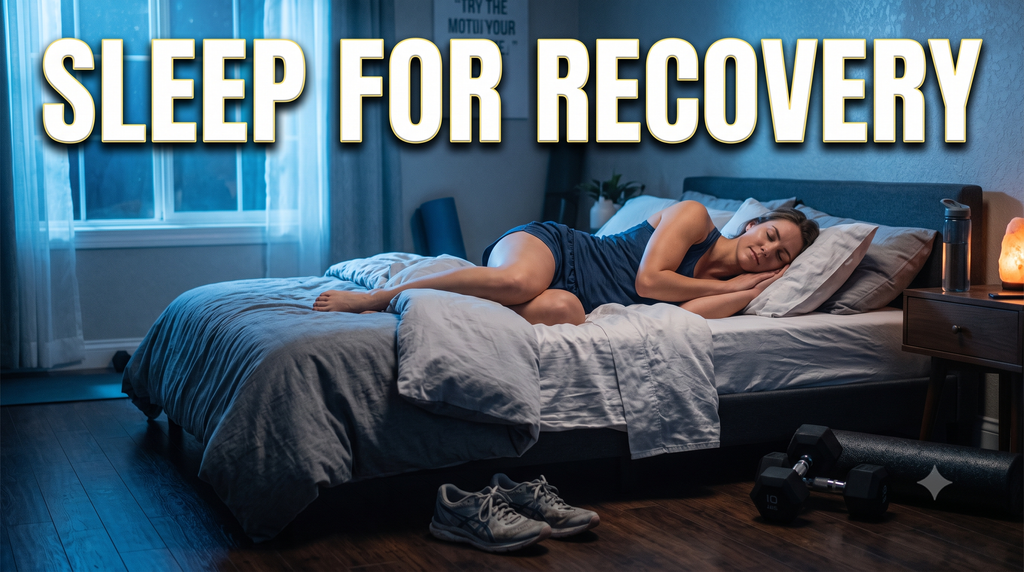
Why Sleep Matters More for Active People
Sleep isn’t passive downtime — it’s when a large share of the physical repair work from training actually happens:
- Growth hormone release peaks during deep sleep, and this hormone plays a central role in tissue repair and muscle recovery.
- Muscle protein synthesis continues overnight, meaning poor sleep can blunt the very adaptation you trained to trigger.
- Immune function is closely tied to sleep quality — chronically under-slept people get sick more often, which sidelines training far more effectively than any single missed session.
- Cognitive and reaction-time effects show up quickly with sleep deprivation, affecting coordination, decision-making, and injury risk during training.
- Hunger and recovery hormones (like cortisol and ghrelin) become dysregulated with poor sleep, which can affect appetite, cravings, and how well the body handles training stress.
In short: undersleeping doesn’t just make you tired. It actively undermines the results you’re training for.
The Sleep Hygiene Basics That Actually Move the Needle
Not all sleep advice is equally impactful. These are the habits with the strongest, most consistent evidence behind them:
1. Consistent Sleep and Wake Times
Going to bed and waking up at roughly the same time daily — including weekends — helps regulate the body’s internal clock (circadian rhythm), which in turn improves sleep quality even if total hours stay the same.
2. Light Exposure
Morning sunlight exposure helps anchor your circadian rhythm, making it easier to fall asleep at a consistent time that night. In the evening, dimming lights and reducing screen brightness in the hour before bed reduces the delay in melatonin release that bright light and blue light can cause.
3. Temperature
A cooler room (generally cited in the range of 60–67°F / 15–19°C) tends to support deeper sleep, since core body temperature naturally drops as part of the process of falling and staying asleep.
4. Caffeine Timing
Caffeine has a half-life of roughly 5–6 hours, meaning a mid-afternoon coffee can still be meaningfully active in your system at bedtime. Active people who train in the evening and rely on pre-workout caffeine should pay particular attention to this, since it’s one of the most common, most overlooked disruptors of sleep quality.
5. Wind-Down Routine
A consistent 20–30 minute wind-down period before bed — dim lights, no screens, something low-stimulation like reading or stretching — signals to the body that sleep is coming, similar to how a warm-up signals to the body that exercise is coming.
Training-Specific Sleep Considerations
Active people have a few additional factors to manage:
- Evening workouts and sleep onset. Intense training raises core body temperature and adrenaline, both of which can delay sleep onset if the session ends too close to bedtime. A cooldown period and a shower can help the body transition faster.
- Post-workout soreness. Significant muscle soreness can affect sleep quality directly by making it harder to get comfortable or stay asleep through the night. Basic recovery practices — hydration, stretching, adequate protein — indirectly support better sleep by reducing this discomfort.
- Naps. A short nap (20–30 minutes) earlier in the day can help offset a poor night’s sleep without significantly disrupting the next night’s sleep, but naps later in the afternoon or longer than 30–40 minutes often do interfere with nighttime sleep onset.
How Much Sleep Is Actually Enough
The commonly cited 7–9 hours for adults is a reasonable general target, but active people — particularly those training at higher volumes or intensities — often sit at the higher end of that range or slightly above it. Athletes in various sports have reported improved performance metrics when deliberately extending sleep duration beyond their usual baseline, suggesting many people are operating with a bigger sleep deficit than they realize.
Signs You’re Not Getting Enough
A few practical markers worth paying attention to, beyond just feeling tired:
- Needing an alarm to wake up, and hitting snooze regularly
- Relying on caffeine to feel functional by mid-morning
- Noticeably slower recovery between training sessions
- Getting sick more frequently than usual
- Irritability or difficulty concentrating that wasn’t previously a pattern
The Bottom Line
For active people, sleep isn’t a wellness extra — it’s part of the training program, functioning as the phase where a meaningful share of actual physical adaptation takes place. Consistent sleep and wake times, smart light and caffeine management, and a cooler, wind-down-friendly bedroom do more for recovery, in many cases, than another supplement or an extra recovery gadget ever will.